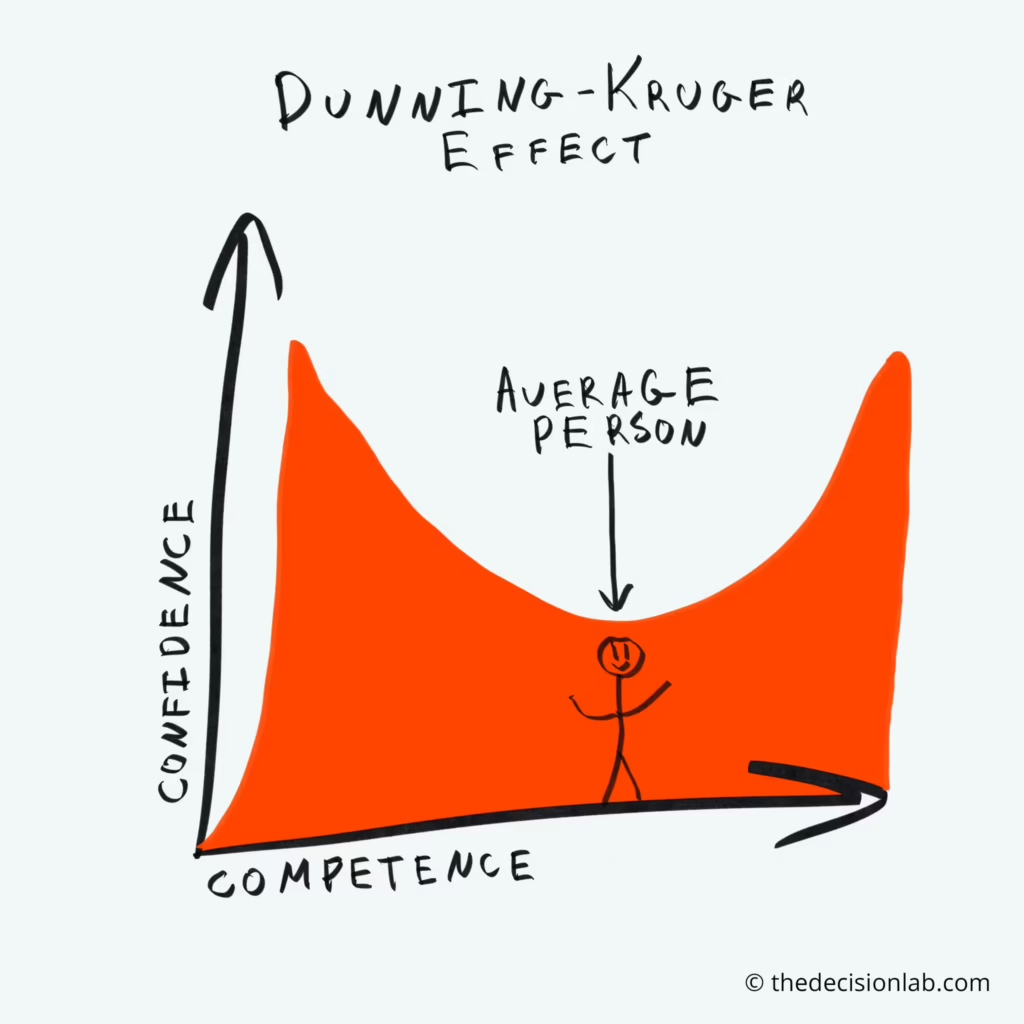
Over the years, I’ve been accused of suffering from a Dunning-Kruger Effect. Hopefully, folks have been referring to “high performers’ tendency to underestimate their skills” and not “people with limited competence overestimating their abilities.”
Practically Speaking
I met with someone recently. They started explaining their various personal and professional problems. I was able to easily weave my personal and professional experience with concepts I’ve gleaned from reading and thinking into what she seemed to think was startling insight.
At first I was shocked. It seemed like it was all common sense and it took zero energy for me to perform this “trick.” It felt ridiculous and I was struck right away with a sense of imposter syndrome. I felt mildly bad for “fooling her.”
On second thought, I tried to analyze what had happened and began to question if there was something to it or not. Partly because I’ve openly talked about this stuff and actively asked trusted friends about surprising situations – situations where [a] I can’t understand why someone can’t solve it or [b] like the above, I can’t understand why someone would think I was being insightful.
Finding Your Own Examples
I think the key to learning where you might be a high performer or where some “secret genius” is lurking is in the open share.
Watching and acknowledging peoples’ reactions to what you do naturally can highlight things that might warrant a closer look. If you keep your thoughts or experiences to yourself, it’s hard to capture and capitalize. So here are 2 simple things to try to implement to begin collecting data.
- Share your opinions and experience with outsiders often. Give people an opportunity to react so you can monitor their reactions.
- Share and discuss peoples’ reactions with someone you trust. Glean additional insight from someone who sees you in action and has the capacity to help you recognize when something might be a pattern. Ideally someone who won’t just think you’re being an egomaniac.
Capturing and Capitalizing
Neuroplasticity will probably have already kicked in, but here’s how to kick it into high gear.
- After a surprising conversation, write a few short notes. At what point was someone most interested in what you were saying or sharing? When did they react strongly? What did you observe?
- Decide what’s next. Who are you going to share this with? Someone on the team? Friend or parent? Could you write a short article about the concepts that got you those strong reactions?
- How can you leverage this unique skill that’s emerged? Can it be applied to your work? Can it create margin for you? If you give it some room to grow, how can it make your life better?
I think our FEPLG process works in essentially everything. I’m basically suggesting to you that you “find” by collecting data in real life conversations, you “expose” by talking with a trusted person, you “persuade” by thinking about how to frame this skill or capacity, you “leverage” by looking for one or two places to apply this genius. Then “growth” opportunities will start to become obvious.
Further reading: I didn’t read this article, I just skimmed it, but it seems like it houses a lot of great intel if you want to dig in further. And I obviously dig that image.