For the past 4 years, I have served on my neighborhood’s HOA board of directors – the first year as Vice President, and the last 3 as President. It hasn’t been my favorite role, but it’s one that I took seriously as I tried to fix a fractured neighborhood.
You see, my neighborhood was very poorly planned from the get-go. It’s a small community, shaped a little like this: —-O—-
There are two entrance streets (the lines), both made up of normal single family homes with big yards and plenty of kids. The middle section of the neighborhood (the circle shape) is made up of 55+ townhomes with no yards and a specific rule that no one under the age of 40 can live there – even if they are married to someone over 55.
Obviously, there are some real differences in lifestyle between single family households and 55+ households, especially in my neighborhood. Most in the 55+ section are retired, and most in the single family section are busy parents like myself, being crushed by career responsibilities and racing around town as a shuttle service for our kids and their never ending programs, events, etc.
As President of the HOA, one of my chief duties is receiving and responding to complaints – whether about the way the board is managing the neighborhood, issues throughout the neighborhood, or tattling about rules people are breaking.
This may or may not come as a surprise, but the vast majority of tattling/complaints I receive come from the retirement crowd. In fact, nearly the only time I hear from single family owners is when they are looking for clarification on neighborhood rules after a retiree has accosted them over some petty, minor infraction.
And why might this be the case? I’ll give you my theory:
The busy homeowners have enough going on in their lives that they don’t have time to stew on small issues that don’t have a direct impact on them, and many of the retirees have allowed enough boredom into their lives that even the most trivial concerns are noticed and amplified.
I should point out, too, that there are plenty of 55+ homeowners in my neighborhood who are an absolute delight. They all tend to be busy, either still working full time, volunteering locally, or engrossed in hobbies. The squeaky wheels are the ones with time on their hands.
From Boredom to Burden
It’s easy to paint my HOA experience as an issue of life stages, but I think it goes well beyond that. I think it’s more an issue of boredom transforming you into a societal burden regardless of your age.
Think about your time in junior high. If it was anything like mine, the kids that made life hell for everyone else were the ones who were disengaged and bored. They became disruptive, and ruined everything for the kids and teachers who were focused on doing their jobs of learning and teaching respectively. Now, I was also totally disengaged while in school, but I was never bored – I would sit there in class completely engrossed in my thoughts and imagination, far too “busy” to distract anyone else or cause trouble. It was the kids who were unable to sit with their thoughts who caused problems.
What about at work? How often do you see a high achiever with a balanced life causing problems? Probably not super often, unless they have been screwed by a low achiever.
Now how often do you see low performers who can’t get their work done stirring up trouble, whether complaining about their co-workers, griping about their compensation, talking a big game about how things “should be done around here,” etc.? Again, if your experience is anything like mine (before working at L+S, where everyone is a saint), it’s probably a lot more common.
Are you not entertained?
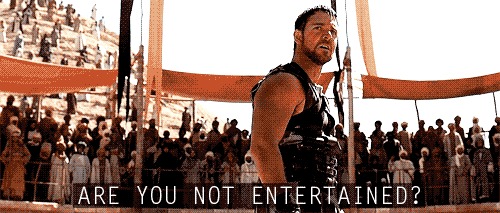
The truth is, we weren’t meant to just sit around being entertained. We’re built to do things – to achieve, to accomplish, and to act in service to those who need more help than we do. When we stop doing those things, the tendency is to begin looking inward at how everything is making us feel – even things that have no bearing on our lives whatsoever.
The benefits of volunteering are pretty well documented. According to Psychology Today,
some of the benefits include:
- Improved mood while reducing stress and anxiety
- Decreased mortality rate and/or increased life expectancy
- Increased sense of purpose from working toward a shared goal
One they didn’t list that I have personally found true in my own life: volunteering helps you shift your focus away from yourself and onto someone/something else. It’s important to sometimes be reminded that the world doesn’t revolve around you.
Helping others not your thing? Good news: according to the NIH, we see a lot of the same benefits from hobbies.
Busy > Busybody
I’m no psychologist, but as a marketer, I am someone who has spent a lot of time analyzing people and their motivations; and I think I can boil this down even further. The benefits are not so much how you choose to fill your time, it’s more that you don’t allow yourself to sit around getting bored for extended periods of time. Don’t sit around waiting for someone or something to mindlessly entertain you – challenge yourself in some way shape or form to step outside of your comfort zone and accomplish (or work toward accomplishing) something. Not only will you feel better, everyone around you will benefit from your being too busy to be a busybody.